




Biopharmaceutical Industry News: Innovative Drug Performance Validation Accelerates, Single-Use Consumables Localization Continues to Break Through
Recently, the biopharmaceutical industry has demonstrated strong vitality across multiple dimensions, including performance realization, industrial chain self-reliance, and cutting-edge technology deployment. Multiple innovative drug companies have reported better-than-expected first-half results, while the domestic substitution process for critical "bottleneck" areas such as single-use process consumables is accelerating.
I. Innovative Drug Sector: Entering a Performance Realization Phase, Global Commercialization Accelerates
Since 2026, the logic of the innovative drug industry has been accelerating its transition from "follow-on imitation" to "source innovation." Behind the sector's momentum are robust semi-annual performance validations from multiple leading companies.
BeiGene achieved a net profit attributable to shareholders of RMB 3.271 billion in the first half of the year, a year-on-year increase of 627.1%, and raised its full-year revenue guidance to RMB 44.9–46.2 billion. Global sales of its core product zanubrutinib (Brukinsa®) continue to break through, and the company believes it has not yet reached its peak sales level. Rongchang Biopharma expects first-half revenue of RMB 5.85 billion, a 433% year-on-year increase, turning losses into profits. Domestic sales of its core products, telitacicept and disitamab vedotin, continue to grow, while licensing collaboration with AbbVie has contributed considerable revenue.
Beyond commercial realization, BD (business development) transactions have emerged as another core highlight. In the first half of the year, Chinese innovative drug companies disclosed a total of 123 BD transactions, a year-on-year increase of 24.24%. Transaction models have expanded from single-asset license-out to multi-portfolio collaborations, co-development, and NewCo structures. CSPC Pharmaceutical Group signed an agreement with global pharmaceutical giant AstraZeneca to establish a joint venture in Shijiazhuang for a next-generation biologics manufacturing base, with CSPC holding a 51% stake, to produce biologics for the global market.
II. Single-Use Consumables Localization: Full-Chain Breakthroughs from Membrane Materials to Fluid Transfer
In the field of single-use process consumables for biopharmaceuticals, domestic substitution is entering deeper waters, with intensive breakthroughs in critical "bottleneck" areas such as key membrane materials and fluid transfer components.
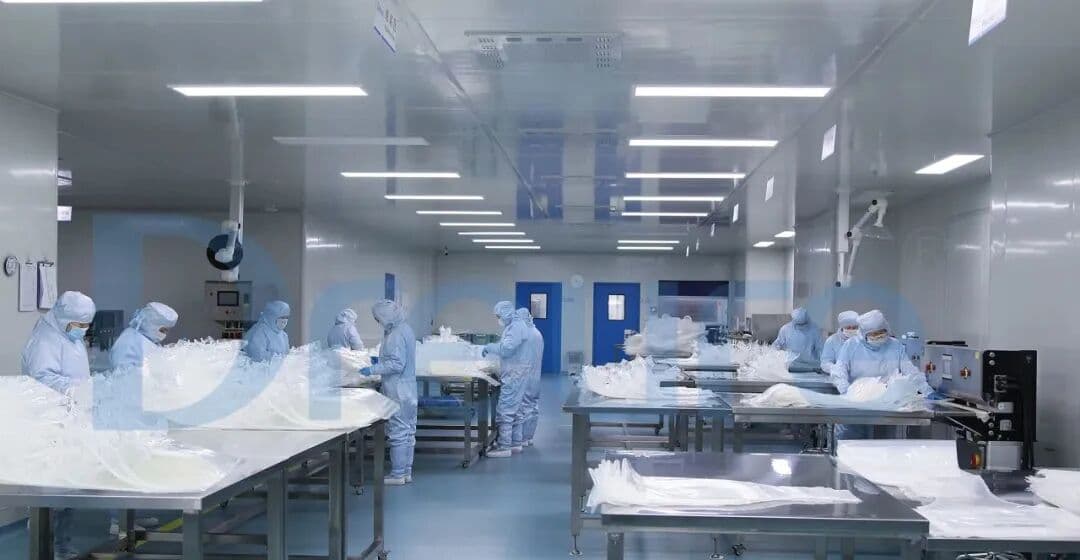
In the core membrane materials segment, Cobetter's self-developed Topene® RB Film (core membrane material for single-use bioprocess bags) has successfully entered the supply chain of a globally leading biopharmaceutical company as a platform-level strategic supplier. The membrane employs an 11-layer co-extrusion technology, marking international recognition of domestically produced high-end membrane materials. Additionally, other domestically produced single-use bioprocess films (such as LeKrius®) have achieved stable mass production, effectively breaking the previous complete reliance on imports.
In the fluid transfer components segment, HanYue High-Tech Materials (including HanYue Biologics Materials), a company specializing in single-use fluid transfer solutions for biopharmaceuticals, recently completed a tens of millions of RMB Series Pre-A financing round, exclusively funded by Longpan Capital. The company's products include low-leachable silicone tubing, weldable thermoplastic tubing, and various filling accessories. This financing round will support a comprehensive upgrade of its production capacity and technology, filling the domestic supply gap for high-end single-use fluid transfer solutions.
III. CGT (Cell and Gene Therapy) Track: Platform Launches, Costs Drop Significantly
As a frontier direction in biomedicine, the CGT industry has achieved key progress in both technological breakthroughs and platform development.
Changzhou High-Tech Zone has recently made frequent moves. The Changzhou High-Tech CGT Platform was officially launched on July 15, planning six flexible production lines with an annual capacity of 1,000 patient-doses for autologous cells and 6,000 patient-doses for universal cells. It pioneered a "fund + platform + hospital" collaborative model, with the first batch of seven companies already stationed. The platform is jointly operated with SciBio, whose self-developed fully automated integrated cell preparation equipment — the "Cell Coffee Machine" — reduces the production cost of cell therapies from RMB 300,000–500,000 per case to approximately RMB 100,000, enabling domestic stem cell drug terminal prices to be as low as RMB 19,800 per injection, roughly 1/70th of the cost of similar US drugs.
In addition, Porton Pharma Solutions' subsidiary Suzhou Porton recently obtained its first "Pharmaceutical Manufacturing License" , marking that it has acquired the compliance qualification to undertake commercial contract manufacturing of cell and gene therapy products.
IV. Capital Markets: Intensive Institutional Research, Financing Rebounds
Data shows that from August 1 to 11, the biopharmaceutical sector ranked first among all Shenwan primary industry sectors in terms of the number of institutional research visits, with commercialization and globalization progress being the key focus. On the primary market front, domestic innovative drug financing in the first half of 2026 reached US$5.81 billion, a year-on-year increase of 79.1%. Driven by performance validation and industrial trends, the pharmaceutical sector has recently outperformed the broader market, with notable capital inflows into high-prosperity segments such as innovative drugs and CXO.